
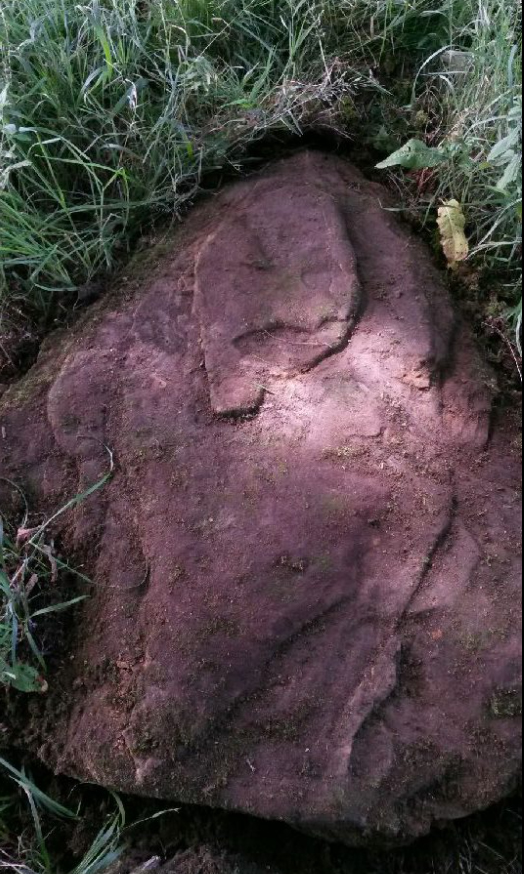
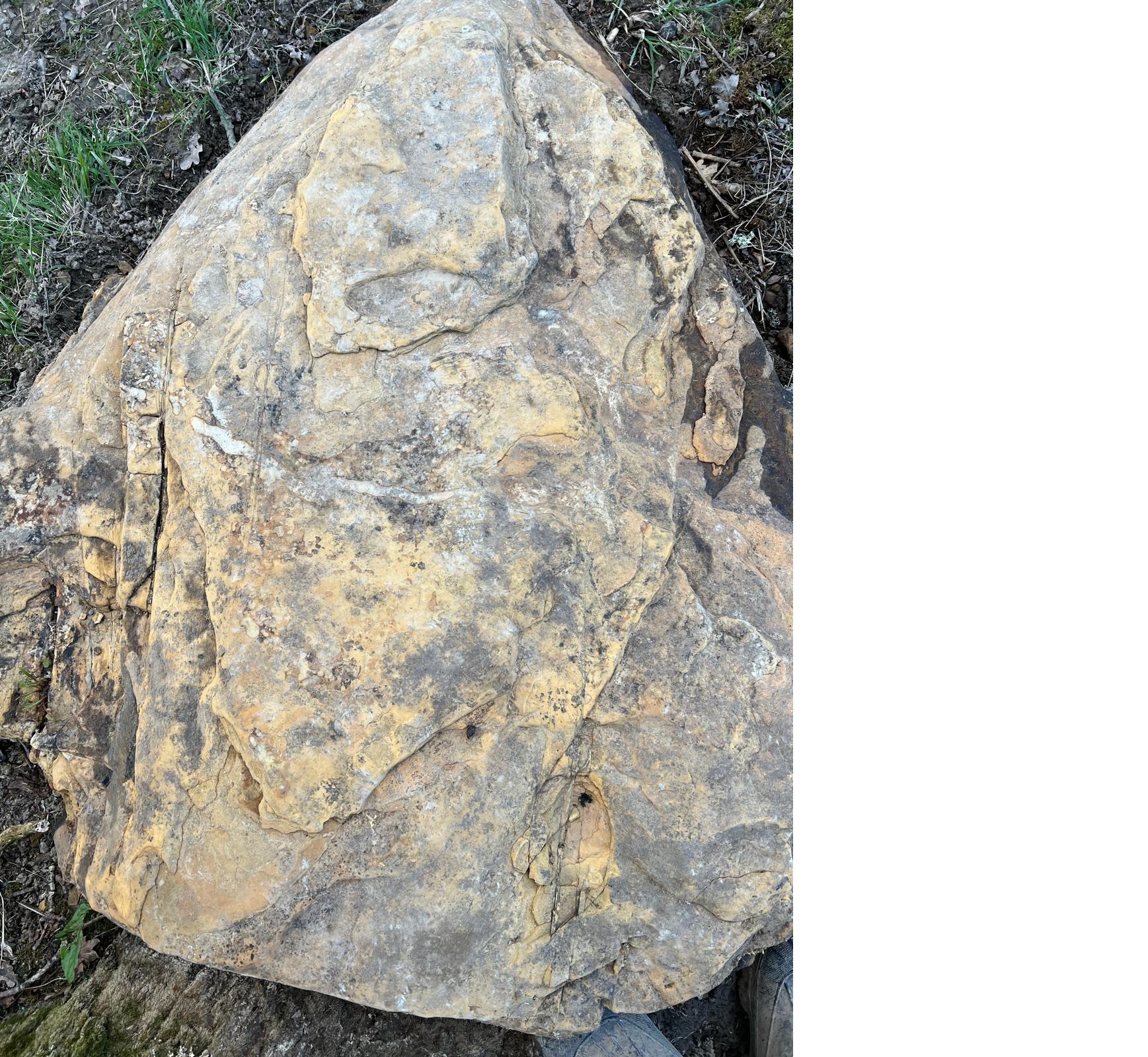
Marker Stone found on Crowhurst Battlefield
Harold’s Burial: Evidence and Uncertainty
Purpose of This Analysis
This page examines the evidence relating to the death and burial of King Harold Godwinson following the Battle of Hastings. The purpose is to assess what can responsibly be said based on the earliest manuscript sources, later narrative developments, and the physical constraints of the landscape.
This analysis does not begin with an assumed burial location. Instead, it evaluates claims in light of the available evidence and its limitations.
The Earliest Manuscript Evidence
The earliest surviving accounts of 1066 confirm Harold’s death in the aftermath of the battle but provide minimal detail concerning the treatment or location of his body.
Key characteristics of the early record include:
- Confirmation of Harold’s death
- Absence of detailed description of burial rites
- No explicit identification of a burial site
- No association with a proven monument or shrine, despite the recent claim there is one at Crowhurst
These limitations are significant and place strict boundaries on what can be inferred from the earliest sources.
Discussion of these manuscripts appears on the Primary Sources page
Development of Later Traditions
Later medieval sources introduce increasingly elaborate accounts of Harold’s death and burial. These include:
- Identification of Harold’s body through physical marks
- Burial at or near the battlefield
- Translation of the body to Waltham Abbey
- Moralised or symbolic interpretations of Harold’s fate
These narratives emerge well after the events of 1066 and reflect evolving political, ecclesiastical, and commemorative interests.
While historically valuable, they must be treated as interpretative developments rather than direct evidence.
Absence of Contemporary Burial Detail
The lack of burial detail in the earliest manuscripts is not unusual for early medieval battle accounts. However, it has important implications:
- It prevents confident identification of a burial site
- It undermines later claims presented as factual certainty
- It requires caution when associating specific locations with Harold’s body
The silence of the earliest record constrains responsible interpretation.
Landscape and Practical Considerations
Any proposed burial location must be consistent with:
- The location of the battlefield
- Practical constraints following a large‑scale engagement
- The political circumstances immediately after the battle
- The treatment of a defeated king by the victorious force
These factors complicate simple assumptions about burial near a later commemorative site.
Topographical context is discussed on the Battlefield Topography page
Relationship to the Crowhurst Valley Hypothesis
If the battlefield is reassessed as located away from the traditional site, then assumptions about Harold’s burial location must also be reassessed.
This does not imply certainty regarding an alternative burial site. Instead, it highlights that:
- Burial traditions are dependent on battlefield location
- Later commemorative claims may reflect institutional interest rather than contemporary practice
- Multiple scenarios remain possible
This research therefore treats burial location as an open question, bounded by evidence rather than resolved by tradition.
Archaeological Evidence
At present, there is no definitive archaeological evidence confirming the burial location of Harold Godwinson.
Constraints include:
- Limited excavation directly linked to Harold’s burial
- Difficulty distinguishing elite burial from later disturbance
- Absence of contemporaneous grave identification
- Finding a stone that looks like a memorial stone on the Crowhurst site which is still under investigation
Archaeological silence is treated as a limitation rather than confirmation of any particular claim.
Further discussion appears on the Limitations & Uncertainties page
Waltham Abbey Tradition
The tradition that Harold was buried at Waltham Abbey appears in later sources and was promoted by the institution itself. While not implausible, this tradition:
- Emerges after the earliest manuscript record
- Serves commemorative and institutional purposes
- Cannot be confirmed independently
It is therefore treated as a later tradition rather than established fact.
Provisional Assessment
Based on the available evidence:
- Harold’s death is securely attested
- The location and circumstances of his burial are not
- Later narratives exceed the evidential base of the earliest sources
- Archaeological confirmation is lacking
Any assertion of a specific burial site must therefore remain provisional.
Relationship to Other Pages
This page should be read alongside:
- Primary Sources
- Battlefield Topography
- Landing Site Analysis
- Methodology
- Limitations & Uncertainties
Together, these pages define the evidential boundaries within which the question of Harold’s burial can be considered.